7/01/2020

Kawanable Kyōsai’s Night Parade of One Hundred Demons (1890)
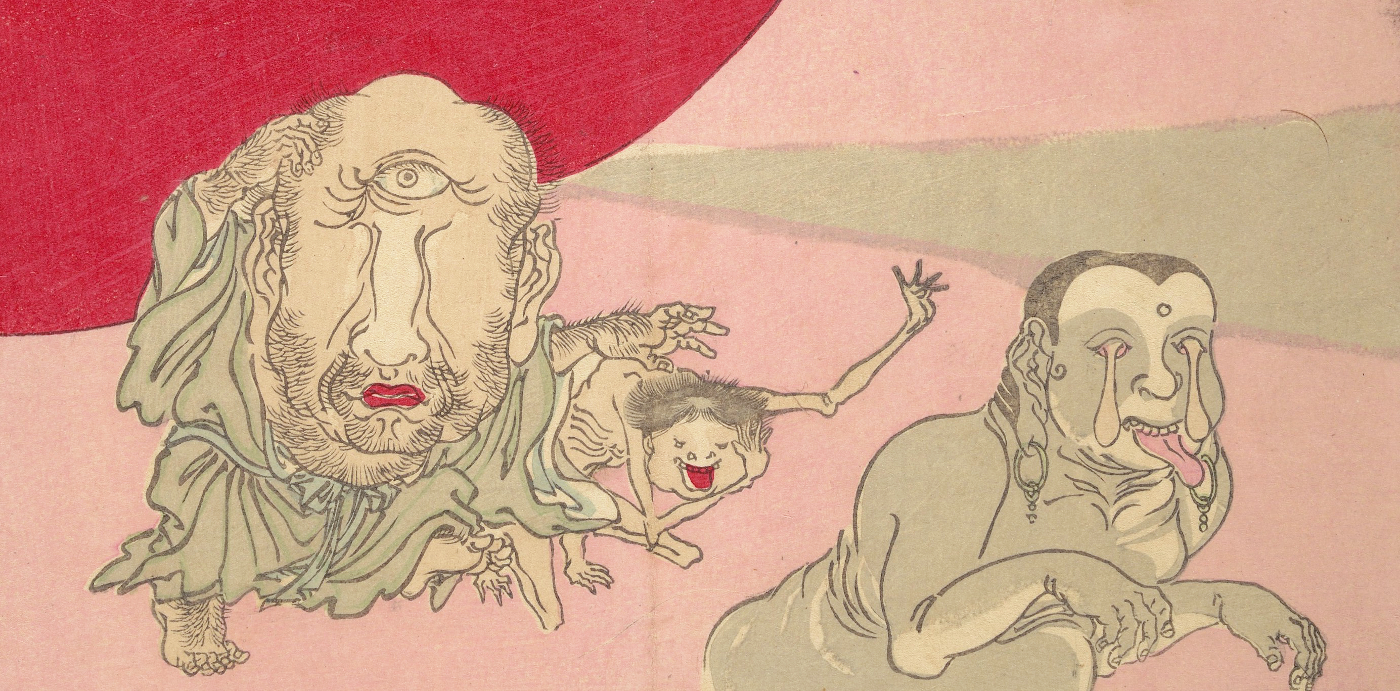

Kawanable Kyōsai’s Night Parade of One Hundred Demons (1890)

Kawanabe Kyōsai (1831–1889), aka “The Demon of Painting”, composed this book of woodblock illustrations toward the end of a life that had begun during the Edo period, when Japan was still a feudal country, and ended in the midst of the Meiji period, when the country was transforming into a modern state.
Kyōsai was by all accounts the bad boy artist of his era. Considered both Japan’s first political caricaturist and one of the first authors of a manga magazine (Eshunbun Nipponchi), Kyōsai was arrested by the shogunate three times for his commitment to free expression. Also, he made no secret of his love for sake.
The Night Parade of One Hundred Demons (Hyakki Yagyō) is a thousand-plus-year-old Japanese folkloric tradition, in which a series of demons parades — or explodes — into the ordinary human world.
Kyōsai’s version was, according to the Metropolitan Museum of Art which houses the book, one of the artist’s most popular volumes, offering “a spectacular visual encyclopedia of supernatural creatures of premodern Japanese folklore”. (To see more examples of such supernatural creatures, also see our post on this Edo-era scroll.)
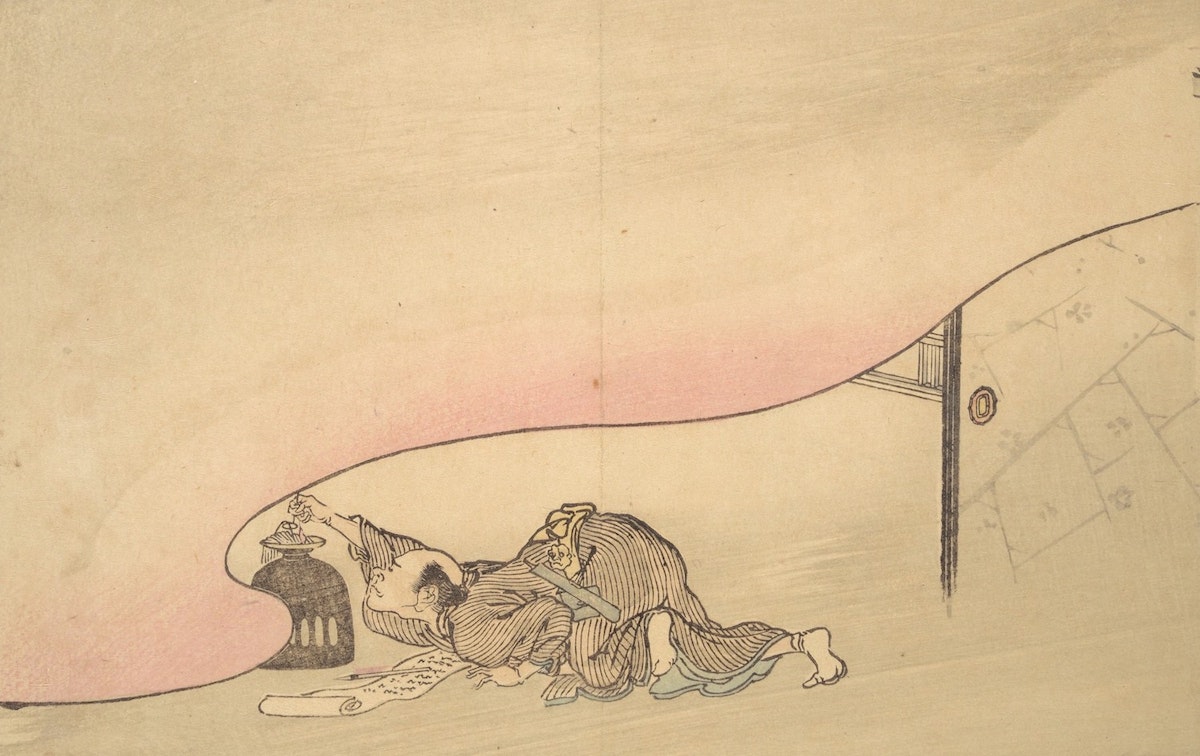
One can see why it was so popular. Narratively, it paves the way for the fantastic parade with two woodblocks: the first depicts a group of adults and children gathered around a coal fire to hear ghosts stories, the second a man (probably Kyōsai) setting down his calligraphy brush and extinguishing the lamp in preparation for the night in which the demons will appear.
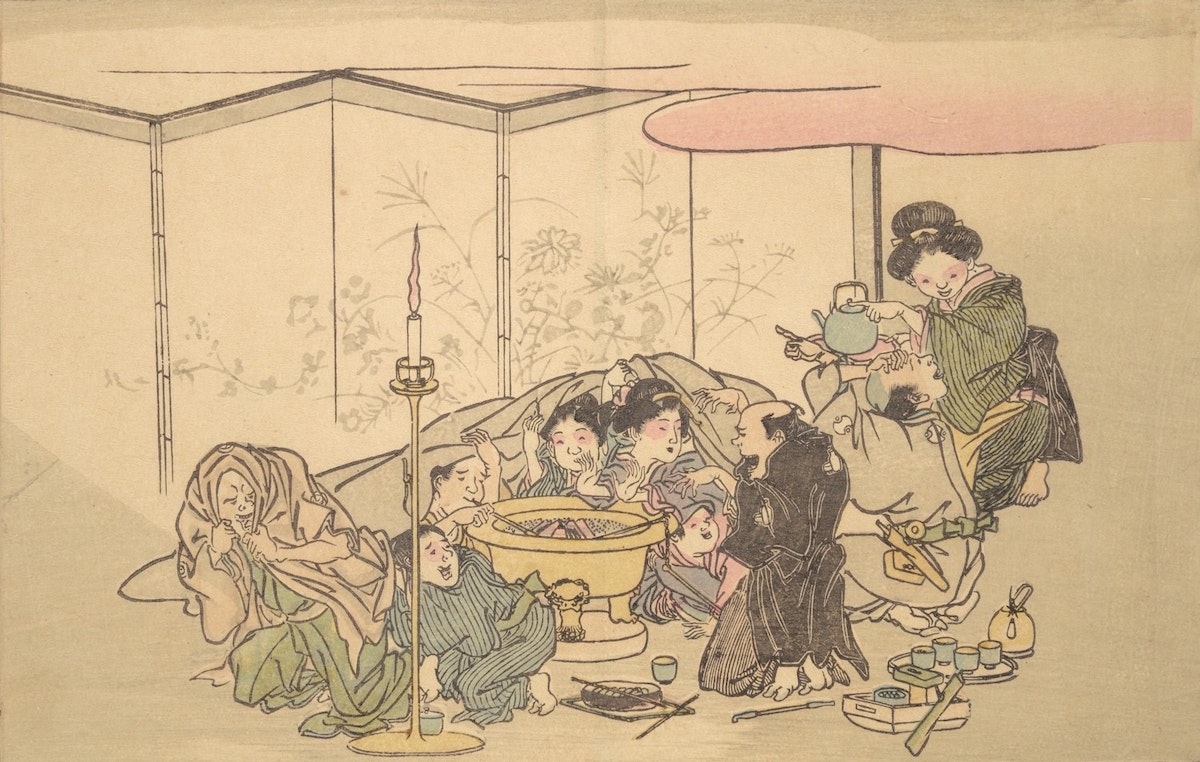
kyosai one hundred demons
Adults and children huddle around a brazier, or coal fire, to hear ghost stories.
kyosai one hundred demons
A man, perhaps the artist himself, has set down his calligraphy brush and reaches to extinguish a lamp. Once darkness falls, the demons will appear.
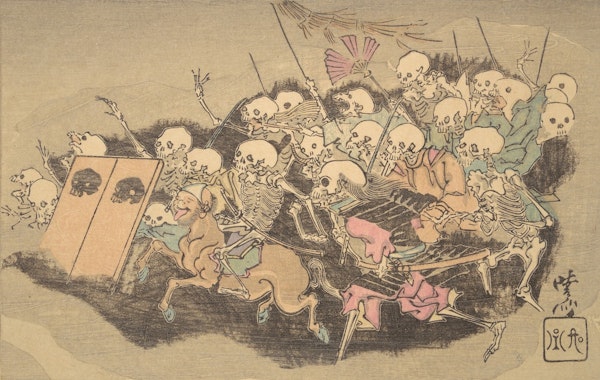
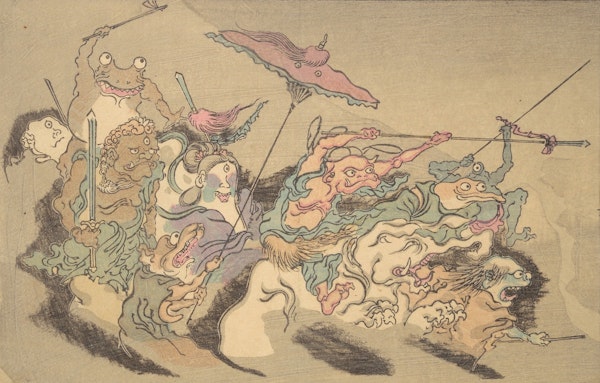
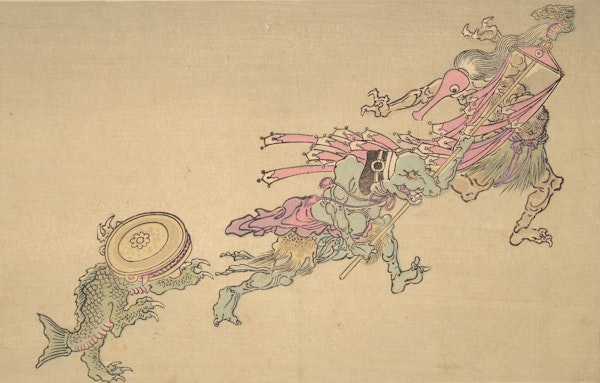
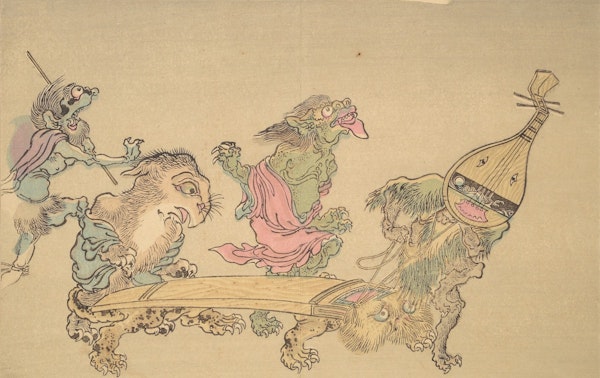
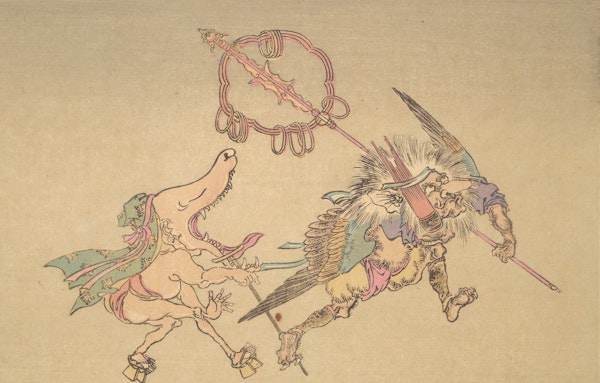
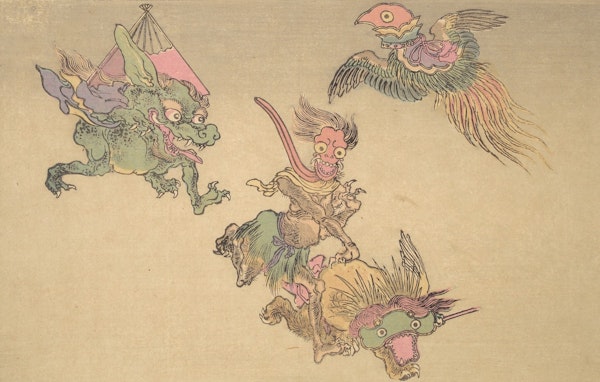
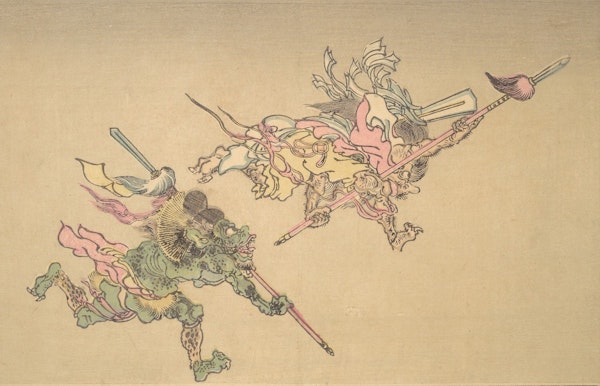
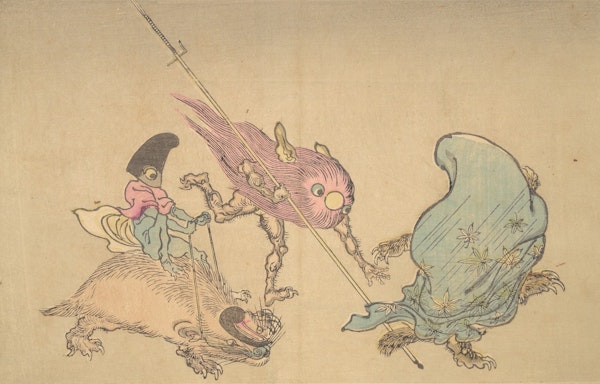
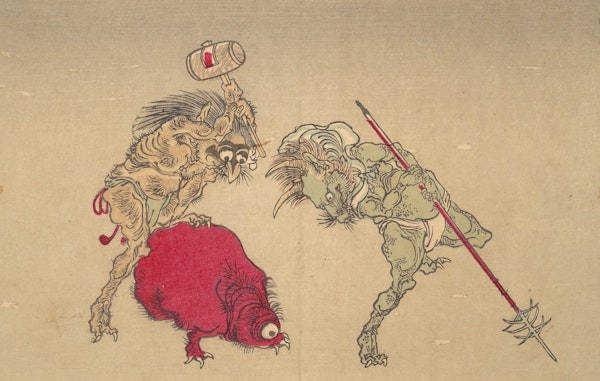
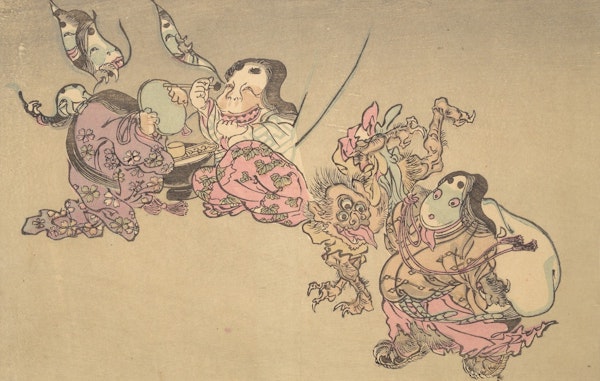
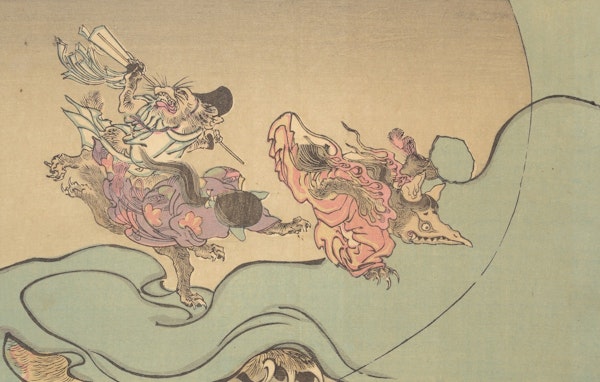
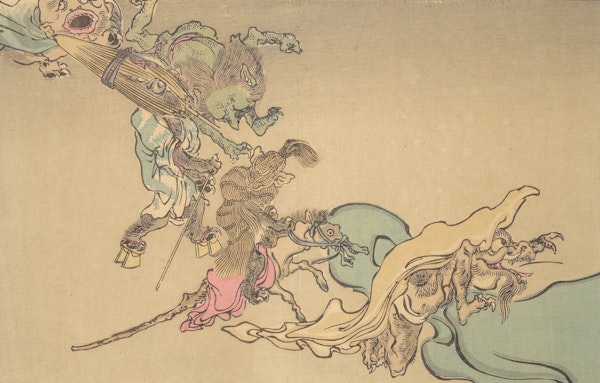
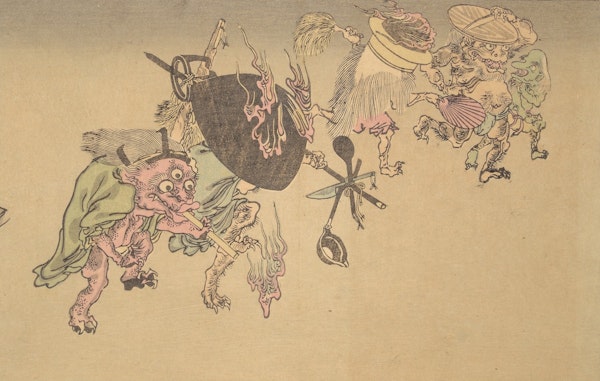
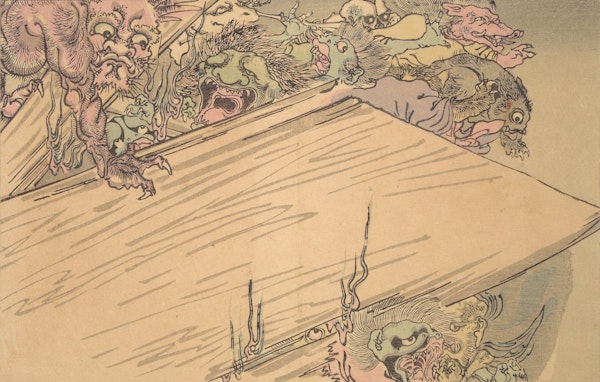
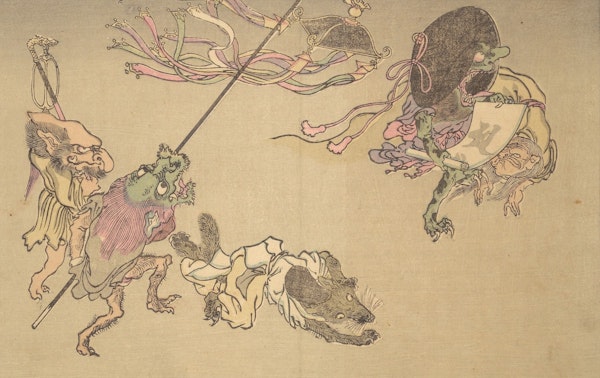
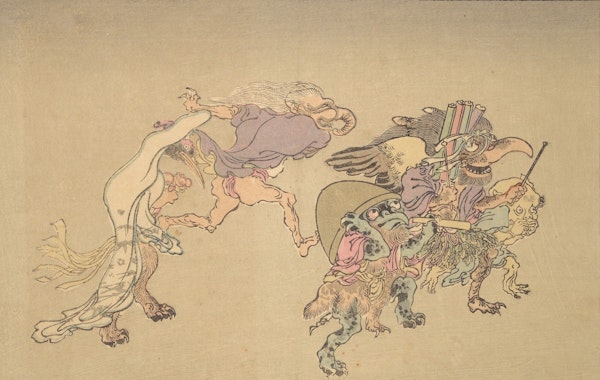
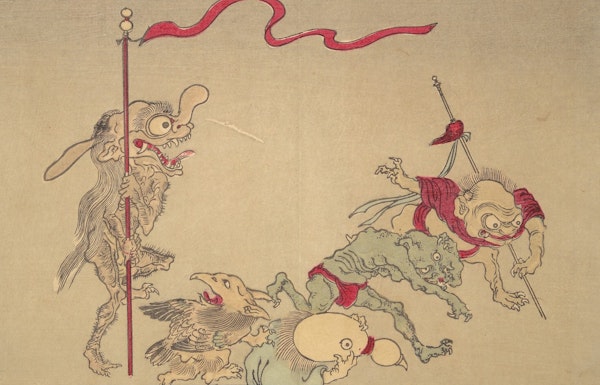
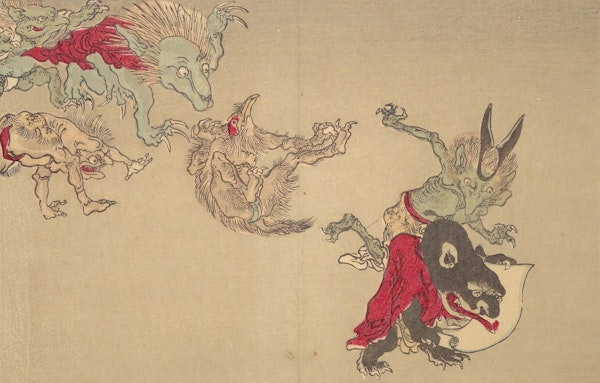
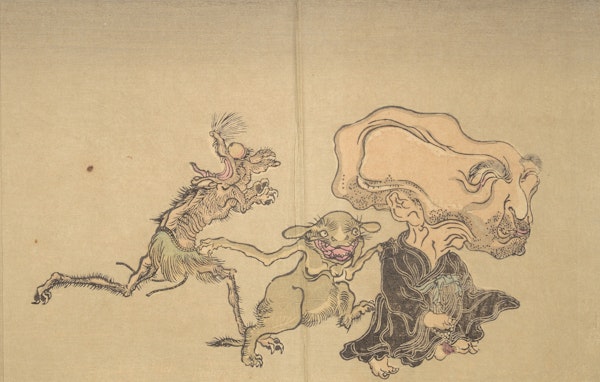
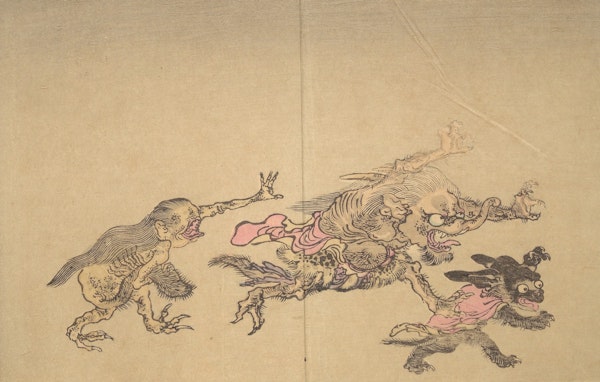
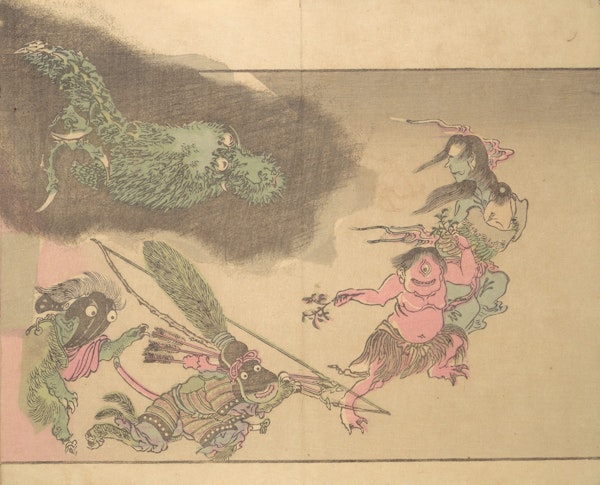
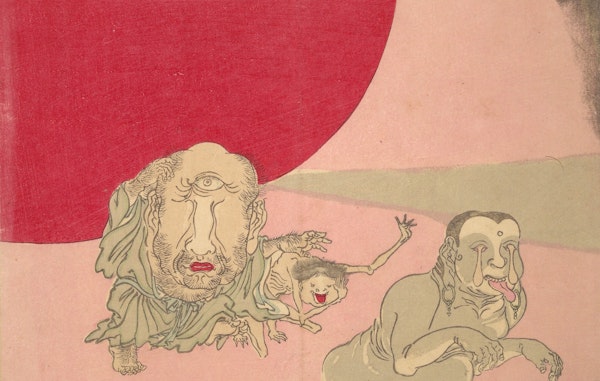
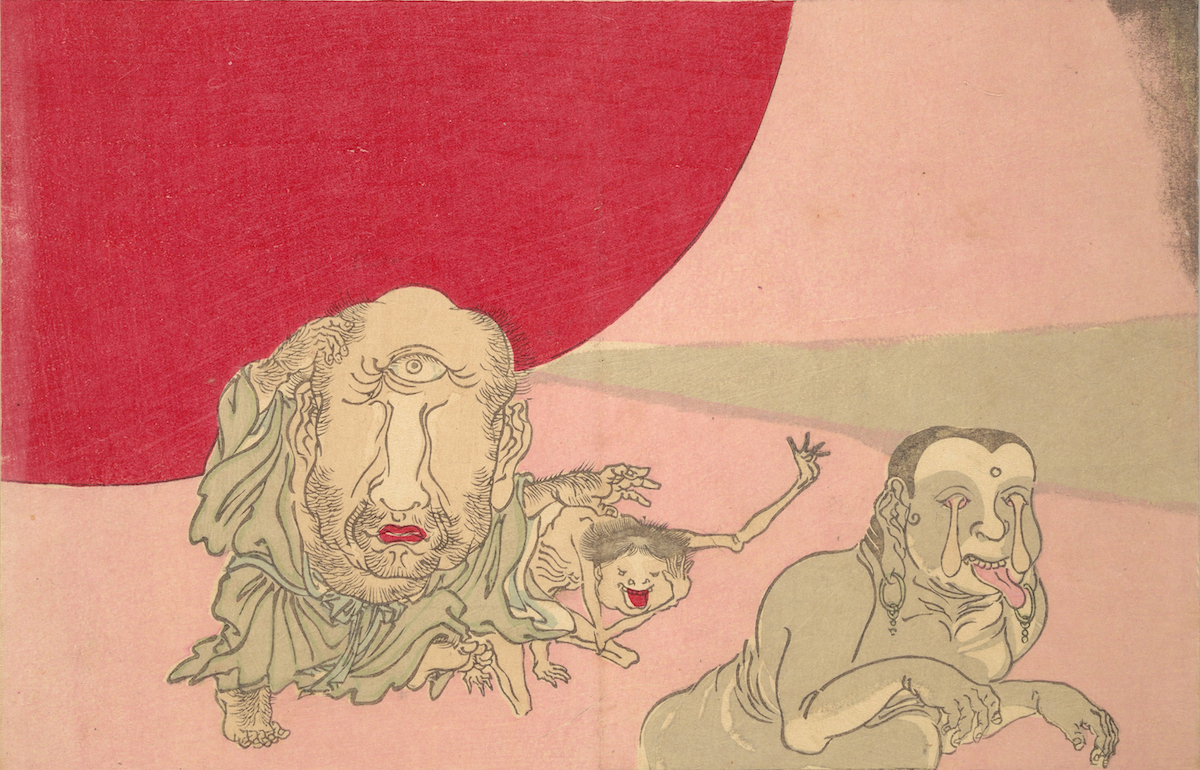
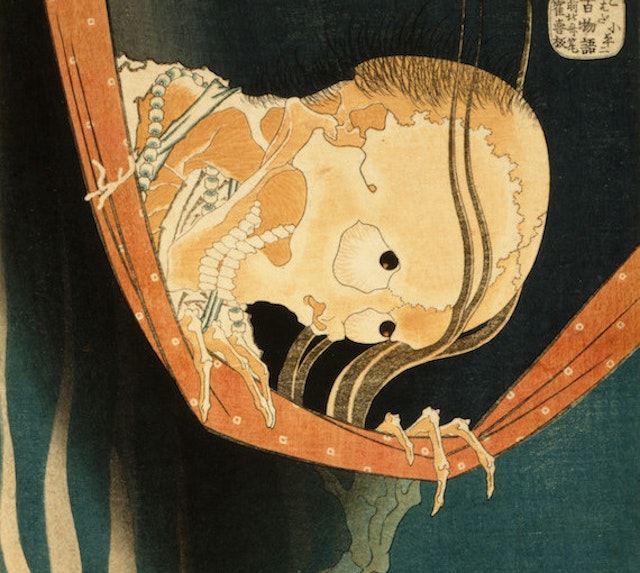
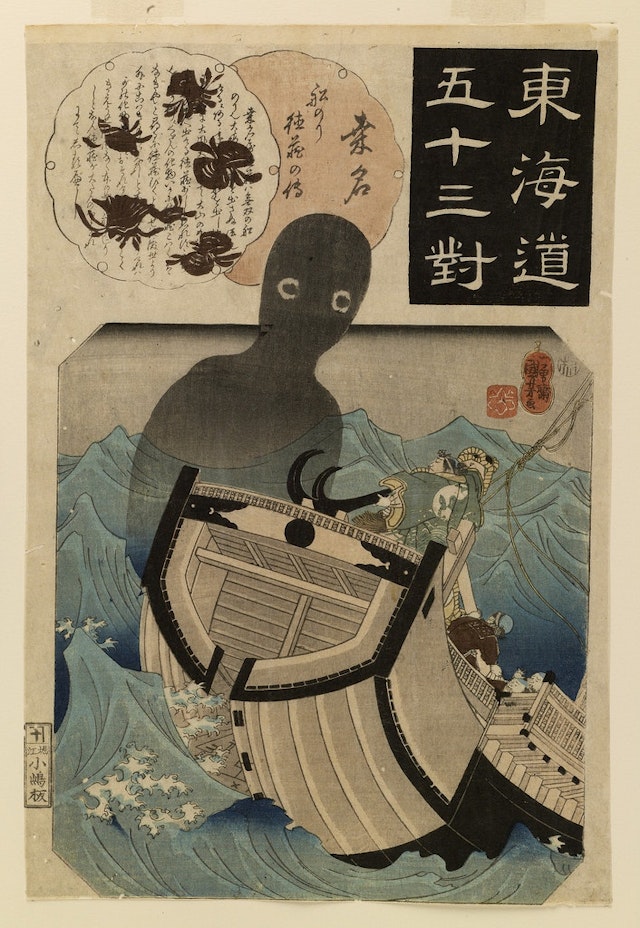
The illustrations of the demons themselves are appropriately terrifying. Skeletal soldiers riding a human-headed horse; a frog-like demon dominating a badger; furry-headed demons and naked demons that look like the stuff of Jim Henson’s darkest nightmares — all parade across Kyōsai’s pages.
Each double-page of the book is arranged in such a way as to join up with the next, as though a continuous scroll is divided over the pages of a book. Though be aware that, of course, the book is bound on the right and so runs counter to the usual left-to-right of English-language books, and so also counter to how our gallery below is set up to display!
RightsUnderlying Work RightsPD Worldwide

Digital Copy RightsNo Additional Rights
DownloadDownloadRight click on image, or see source for hi-res version
If You Liked This…
Prints for Your Walls
Explore our selection of fine art prints, all custom made to the highest standards, framed or unframed, and shipped to your door.
Start Exploring

6/30/2020

Ever wondered what planets would look like if they were as far away from Earth as the Moon?


US Architecture Agg Hab by i thee and Roundhouse Platform

I/thee builds prototype papier-mache home on Texas cattle farm

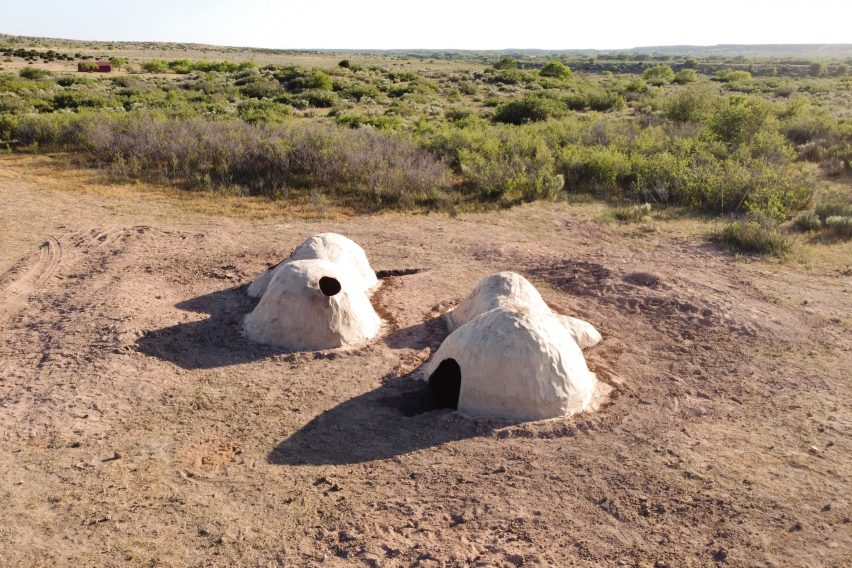
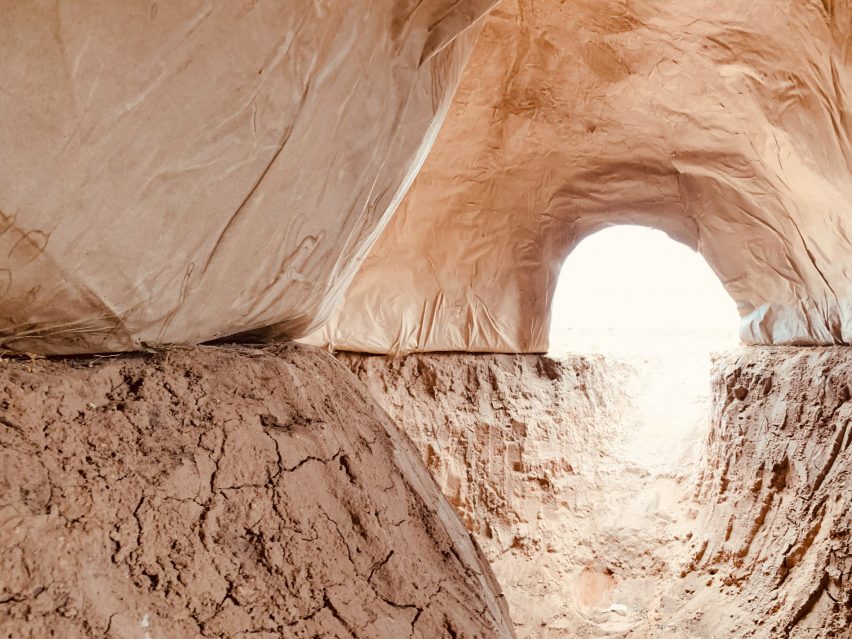
Nearly 300 pounds of paper was cast in large holes in the ground before being flipped over to create the Agg Hab prototype home on a Texas ranch, which the designers claim is one of the "world's largest, self-supporting, papier-mache structures."
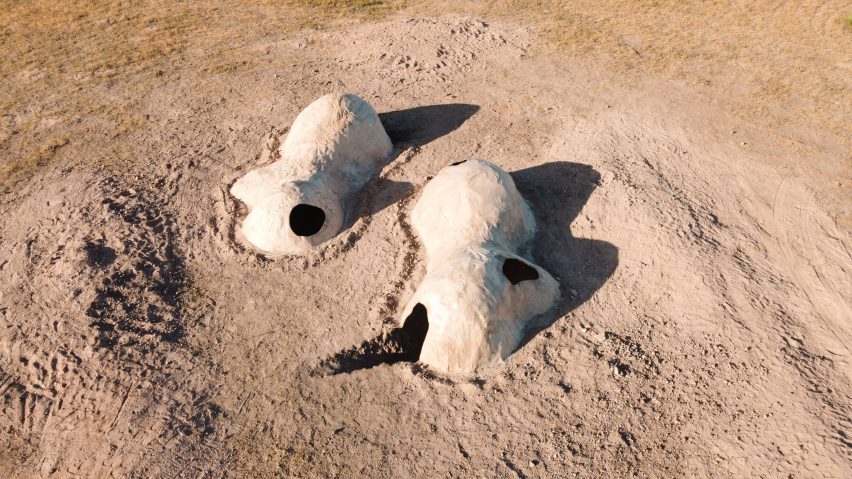
US design-build studio I/thee and curatorial platform Roundhouse completed two structures called Agg Hab, short for Aggregate Habitat, on a cattle farm in Clarendon, Texas, as part of an artists' residency.
US Architecture Agg Hab by i thee and Roundhouse Platform
Large holes were burrowed nearly two metres deep into the ground to form casts for the papier-mache domes, which are made out of nearly 270 pounds worth of recycled paper and 200 litres of non-toxic glues.
The team said the protoype is an example of an eco-dwelling due to the materials used.
US Architecture Agg Hab by i thee and Roundhouse Platform
"Most of the project was made out of recycled papers, and the adhesives were all handmade by our team on-site using no animal products or toxins," I/thee co-founder Neal Lucas Hitch told Dezeen.
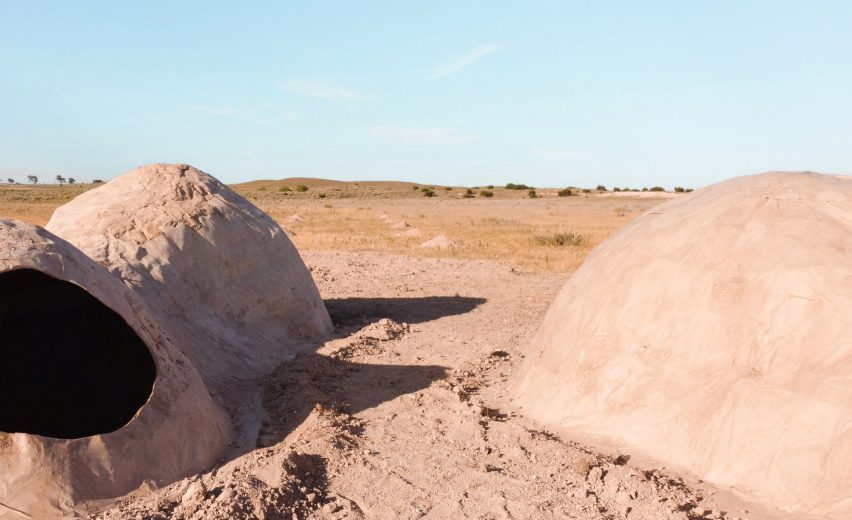
Once set, the paper shells are four millimeters thick, 20 feet long (six metres long) and eight feet (2.4 metres) wide. They are then flipped over to rest on top of the excavations to create enclosures that are nearly three metres tall.
US Architecture Agg Hab by i thee and Roundhouse Platform
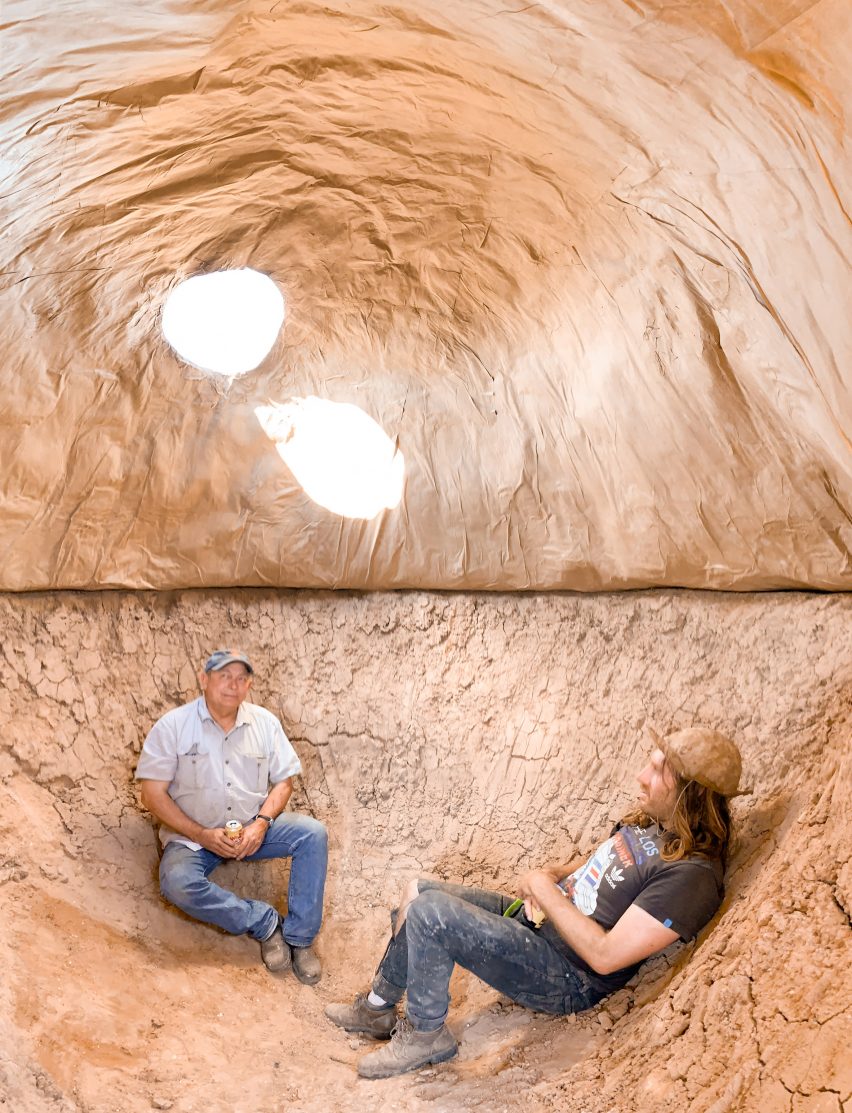
"Together, the holes, matched with their respective shells, create a semi-subterranean house in which the negative and positive expressions of a series of excavated forms take on a reciprocal relationship to create multiple habitable spaces," the team added.
"The house stands unofficially as one the world's largest, self-supporting, papier-mache structures."
US Architecture Agg Hab by i thee and Roundhouse Platform
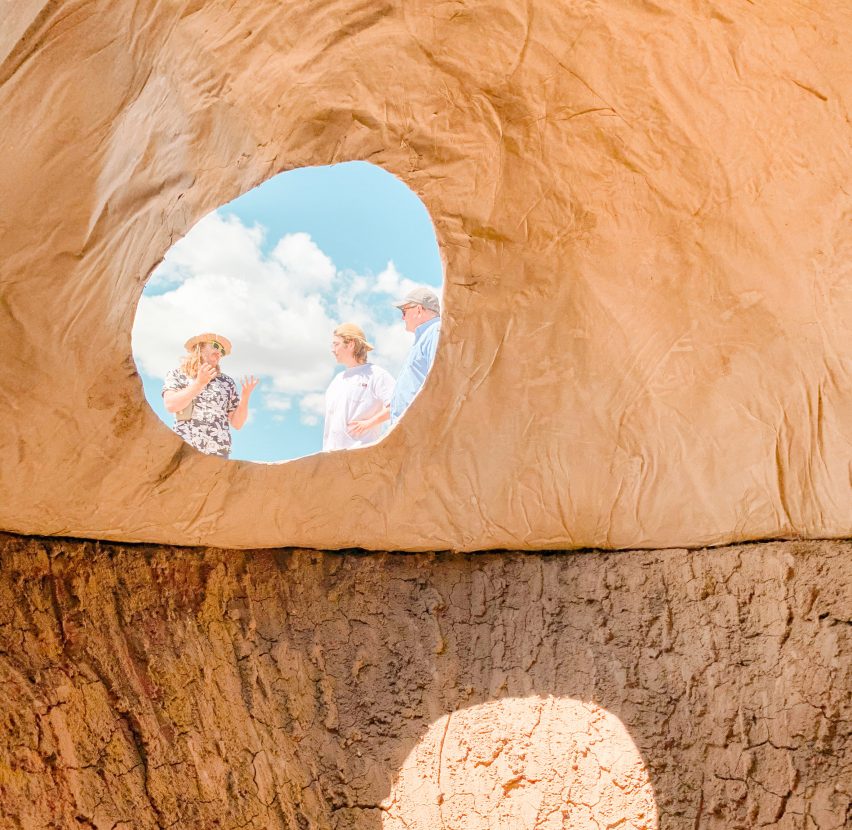
Agg Hab features a series of openings in the paper structures that form apertures to let in natural light and doorways to enter inside.
A slope is carved into the earth to create a ramp that leads inside the semi-subterranean structure.
US Architecture Agg Hab by i thee and Roundhouse Platform
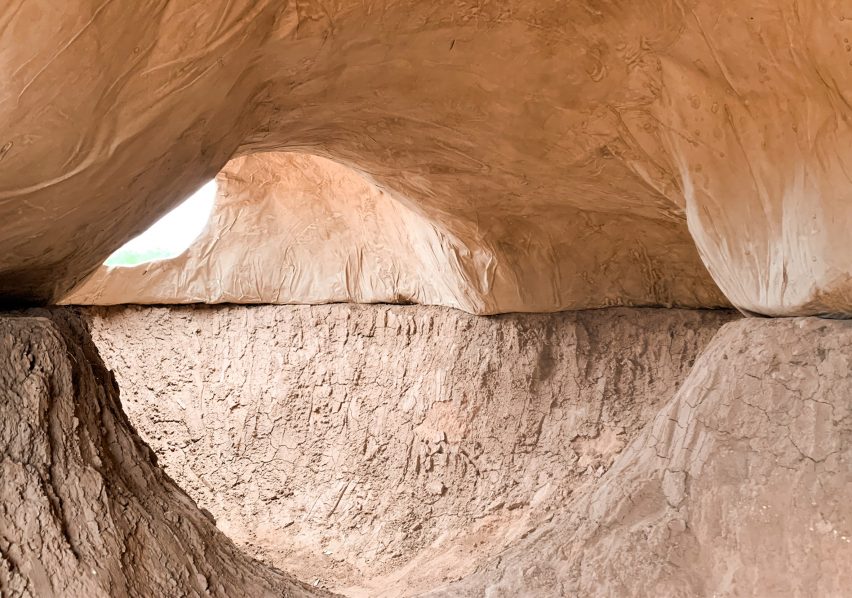
"As light filters in through the openings, it reflects off the glossy paper, producing an almost ecclesiastical, yet somehow sublunary, environment," said the team.
"As people move into the spaces, they become enveloped in a primordial experience – as if gestating in the womb of mother earth or stowing away in the belly of a whale just below the surface of the ocean."
US Architecture Agg Hab by i thee and Roundhouse Platform
Agg Hab was created as part of this year's Oakes Creek Residency, which is held annually on a Texas ranch owned by cowboy-artist, John Robert Craft.
It is among a number of projects experimenting with building materials. Others include 3D-printed earth structures that Rael San Fratello created to demonstrate potential of mud architecture and Stephanie Chaltiel's emergency house prototype that is built with mud-spraying drones.
Photography is by Neal Lucas Hitch and Sarah Aziz
.

Project credits:
Project team: Neal Lucas Hitch, Noémie Despland-Lichtert, Brendan Sullivan Shea, Martin Hitch, Kristina Fisher, Maxime Lefebvre, Julia Manaças, John Robert Craft, Charlotte CraftMore images and plans
US Architecture Agg Hab by i thee and Roundhouse Platform

Ying Li’s Ecstatic Landscapes


Ying Li’s Ecstatic Landscapes

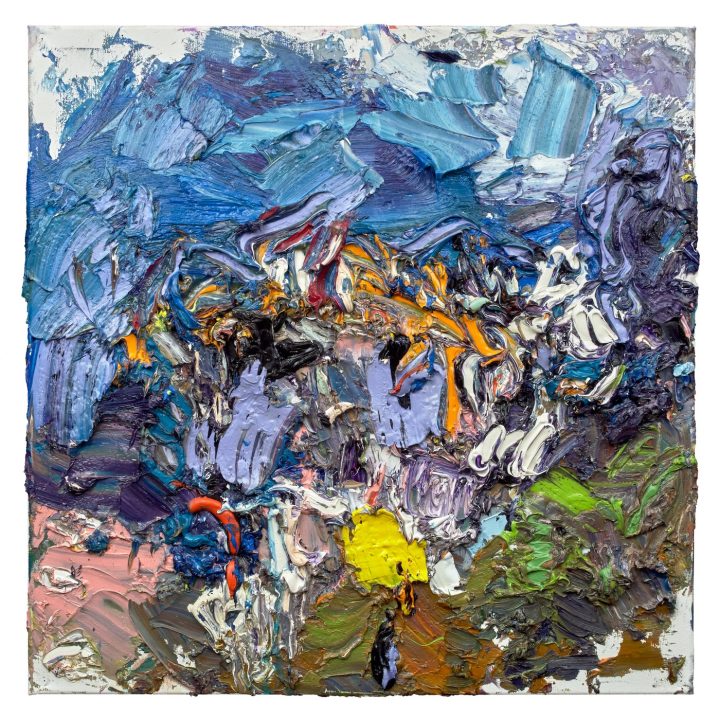
Ying Li, “Telluride, Valley of the Hanging Water #3” (2019), oil on linen, 24 x 24 inches (all images courtesy Pamela Salisbury Gallery, Hudson, New York)
I first saw Ying Li’s work in a two-artist exhibition in which she shared the gallery space with my wife, Eve Aschheim (Ying Li/Eve Aschheim: Recent Paintings at the New York Studio School, June 6 – July 28, 2013). Like others who have written about her work, I was immediately struck by her sybaritic application of thick paint to modestly sized canvases.
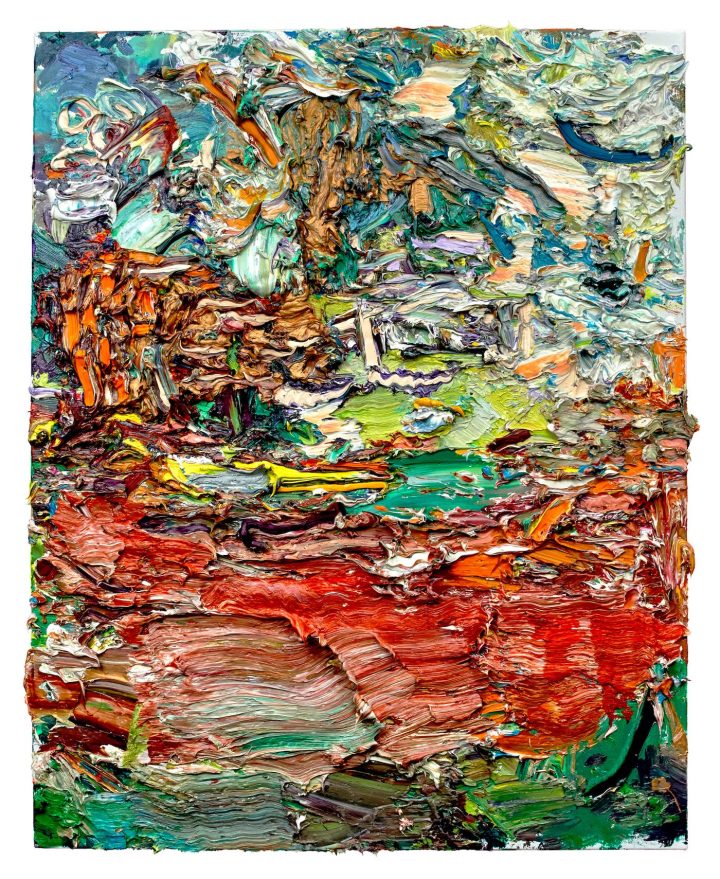
Li paints on site, which she indicates in her titles, such as “Telluride, Valley of the Hanging Water #3” (2019, oil on linen, 24 x 24 inches) and “Rosendale Trestle” (2019, oil on linen, 24 x 30 inches). When she makes large paintings in her studio, she evokes the city as subject matter, as in “Writing the City #3” (2020, oil on linen, 74 x 58 inches). These three paintings, along with 11 others, will be featured in her upcoming exhibition, Ying Li: Alterity, at Pamela Salisbury Gallery, Hudson, New York (June 27–July 26, 2020).
The other thing that struck me about Li’s work — an impression that has stayed with me — is the way she enlivens what many have considered an exhausted possibility: the vigorous application of thick paint in service of a perception of nature. You might think, from this description, that I’m writing about a painter working in the late 1950s, in the wake of the Abstract Expressionists, who showed in an artist-run gallery on Tenth Street in New York City.
Ying Li, “Rosendale Trestle” (2019), oil on linen, 24 x 30 inches
A lot of writers have evoked Abstract Expressionism while extolling Li’s paintings. However, during that era, we might remember, Clement Greenberg believed that gestural painting had devolved into a mannerism, leading him to come up with the dismissive term, “Tenth Street touch” for artists who, to his eye, were working in the shadow of Willem de Kooning.
This knot is what I began thinking about while contemplating Li’s work. And the longer I looked at it, the more I was convinced that even the most positive reviews written about her paintings failed to address a key aspect of her artistic development. It seemed to me that Li is free of the baggage associated with thick gestural painting. How had she arrived at a place that was not at all nostalgic for the past, or mannered in its gestures?
I decided to contact Li about her early history, previous to her arrival in America, which I felt would be a key to what I was seeing, and not seeing, in her work. In 1983, when she immigrated to New York from China, Li was already an accomplished artist working in two styles that the art world would never have recognized, then or now: traditional Chinese ink-wash landscapes and Soviet-style propaganda paintings.
Ying Li, “Bee Keeper’s Farm, Castro Marim #3” (2020), oil on linen, 18 x 24 inches
Essentially, Li went from a world that accepted her, albeit with many rules and restrictions, to one that was less restrictive but also dismissive of the art she was making. How do you become accepted in this new situation without losing yourself and going completely adrift?
In an email Li sent me (June 23, 2020) in response to my questions, she wrote that she had “painted mural paintings of Mao’s portraits in the village where I was sent during Cultural Revolution.” She also “painted historical propaganda paintings commissioned by the government when I was teaching at Anhui Normal University.”
In this same email, she stated:
I studied traditional Chinese ink wash painting in college, from 74-77. It was a requirement for students, I was one of them, whose concentration was Western oil painting. I hated it at the time and thought it was like painting with soy sauce. All I wanted was to paint with color. I was foolish.
Li was not permitted to apply to colleges outside of Anhui, a landlocked province. Anhui Normal University, where she studied art, was “the only university that offered Fine Arts study in Anhui Provence at the time.”
Ying Li, “Telluride, Valley of the Hanging Water #5” (2019), oil on linen, 16 x 20 inches
What Li did not state in her email was that “Western oil painting” was synonymous with Soviet-style socialist realism. But she dreamed of painting in intense, exciting color.
By the time Li traveled to the United States, she was in her early 30s. It was the first time that she saw oil paintings by artists such as Pierre Bonnard, Chaim Soutine, Willem de Kooning, and Lois Dodd. Not one to look back, she also took classes at Parsons School of Design, where she studied with Leland Bell, John Heliker, and Paul Resika, three strong-minded, unfashionable, modernist painters who engaged in rigorous arguments with the institutionally supported direction that art has taken since the mid-1950s.
This is what I find remarkable about Li’s work. In order to make it, she had to reinvent herself in her 30s and already deeply grounded in two other traditions. Against all odds, she decided she was going to have a second act. Moreover, her encounters with strong-minded teachers resulted in work that in no way resembles theirs. Her interest in exploring many aspects of a single a motif is something she shared with both Bell and Resika, but that is about as far as the connection goes.
Li’s dramatic and remarkable reinvention, her joyous exploration of color, which she had only been able to dream about in China for so many years, brings to mind another Asian artist, Kenzo Okada (1902-1982), who was a highly respected realist painter in Japan when he came to New York in 1950, where he began making sensitive abstract paintings that still have not gotten the attention they deserve. I have often wondered if one reason for this is that Okada’s paintings seem too Asian for New York tastes.
Ying Li, “To the Secret Garden” (2018), oil on linen, 24 x 18 inches
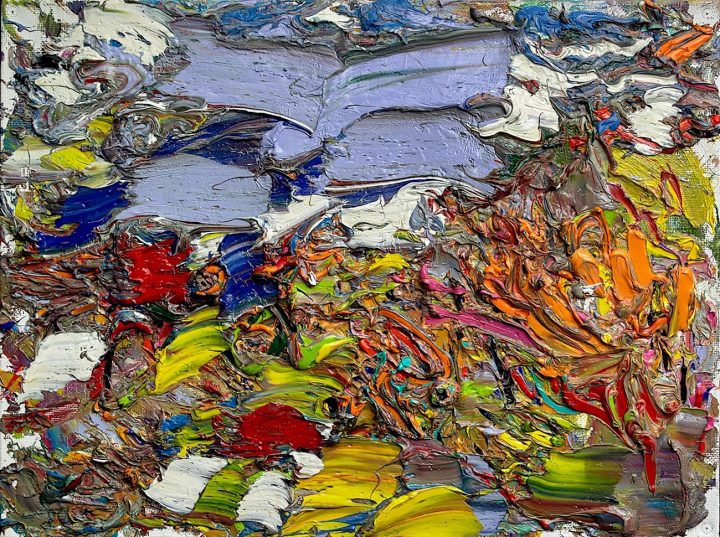
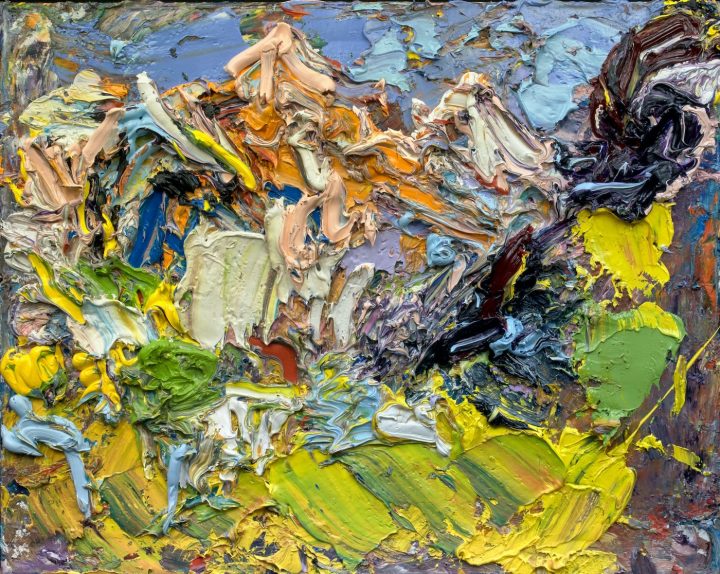
What Li does is seamlessly merge structure and improvisation in the treatment of her subjects, which are rural landscapes — fields, mountains, rivers, and trees. The paint is applied thick with all kinds of instruments, from different-sized brushes to direct squeezes from the tube. The surfaces are built as dense as stucco. A wide sweep of striated paint moving across the surface reveals its inner colors, like a roughly surfaced stone.
Absorbing lessons from Vincent van Gogh, Li uses the direction of the brushstrokes to convey motion, the continuously changing landscape, and the world in constant transformation. Once we know Li’s history, it is hard not to think that the joy we see in the work is rooted in her youthful dreams of painting in intense color while luxuriating in oil paint’s materiality.
The subject emerges out of the structuring of the marks, all of which are different. While vigorously applied, it is evident how much control Li possesses over her medium. The thickness of the paint allows for both fast and slow strokes, and for the muscle memory of years of calligraphy to kick in.
This is what I thought about when I was looking through images of the work in her upcoming show, that her previous reviewers, by emphasizing a connection to Abstract Expressionism, however well intentioned, overlook the deeper roots of Li’s mark-making, which is calligraphy.
Ying Li, “Chautauqua Bell #23” (2018), oil on linen, 20 x 24 inches
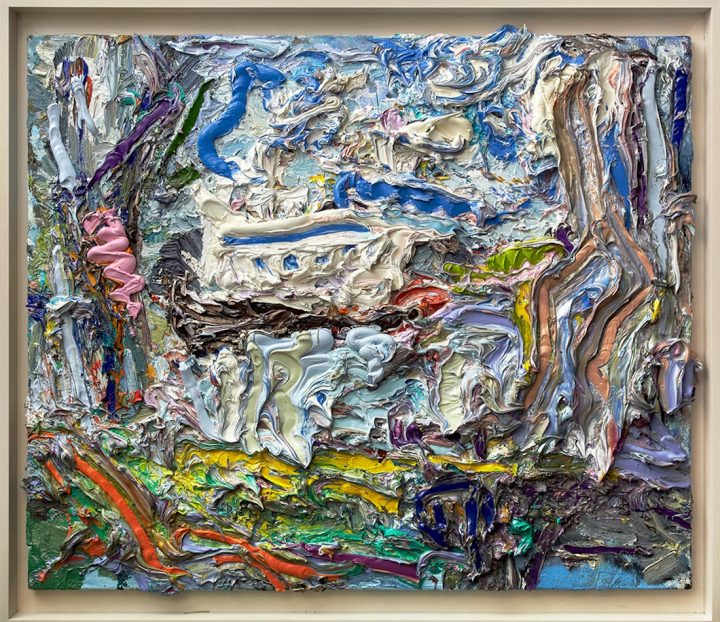
The compositional structure of “Chautauqua Belle #23” (2018, oil on linen, 20 x 24 inches), with strong verticals on the painting’s left and right side and horizontals set between them, is hardly new, but in Li’s hands, it is fresh. She layers the elements yet manages to keep each color intact — which is hard to do when painting wet into wet. There are red lines, evidently squeezed from the tube, in the lower left hand corner, along with a thick pink zigzag squiggle on the left side and blue marks in the sky.
Direct and deft, the individuality of these marks seems possible only after years of practicing calligraphy. This is part of what Li was able to transform from her background into her reinvented method. She did not completely reject her past, but rather turned it into something that was new for her. In the process, she came up with new ways to celebrate color.
Chinese ink wash landscape painting is made of abstract calligraphic marks. It is not about resemblance but essence. By bringing that knowledge and experience to the colors of oil paint, Li has created something all her own. That she did so at an age when many artists would already be set in their ways, is miraculous, and the joy of that turning point in her life and career radiates throughout all her work.
Ying Li: Alterity opens at Pamela Salisbury Gallery (362 1/2 Warren Street, Hudson, New York) on June 27 and continues through July 26.
 hyperallergic.com